


Description
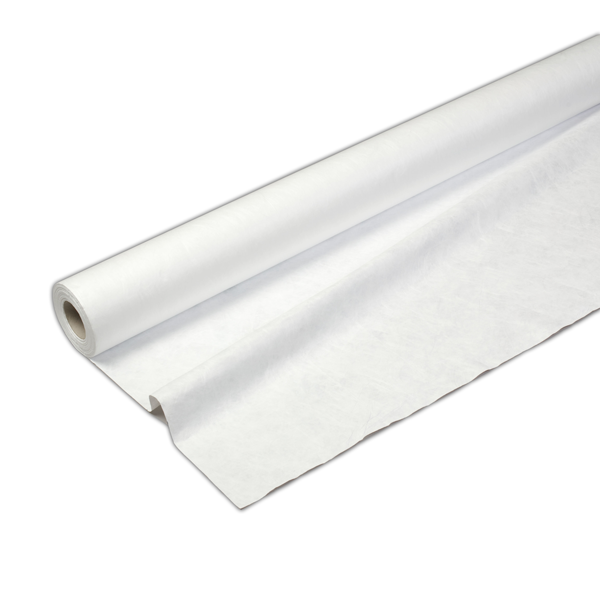
Tyvek® has been universally adopted for its strength, ventilation properties and safety as a packaging material for artworks since its introduction in France in 2007 by Chassitech for the Museum/MH market.
The two grades of Tyvek® approved for the conservation, packaging and transport of paintings and sculptures are as listed below:
- Grade 1442R (= “paper” feel without micro-perforations) has a smoother surface.
- Grade 1623E (= fabric feel + micro-perforations), archival quality and particularly breathable.
1623E is softer due to micro-perforation, while 1442R, which is unperforated, has a smoother, stiffer surface.
Tyvek® is pH-neutral, water-repellent and lint-free, allowing condensation to drain off and protecting against external aggressions (notably dust particles).
Each grade is stocked in two widths, 152.4 and 304.8 cm, in rolls of 50m.
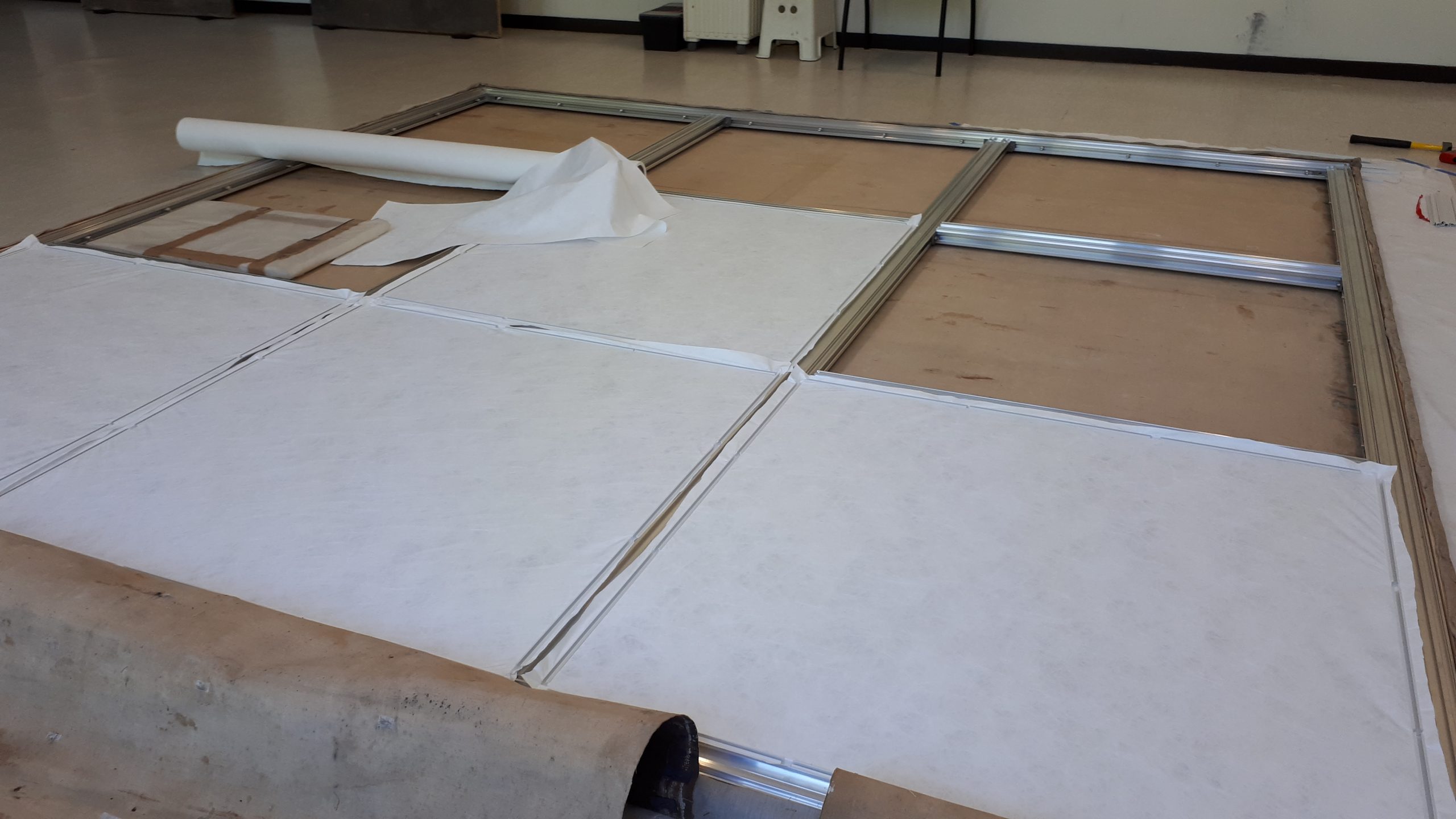
Tyvek® non-woven fabric is also used for back protection of artworks when rigid protection is not desired. When used in this way, Tyvek® enhances the restoration work and underscores your commitment to the preventive conservation of artworks.
Its generous width allows for the use of a single piece of Tyvek® as a backing, resulting in significant time savings during installation.
While typically stapled to the back of artworks, Tyvek® can be made removable either by clipping (on our aluminum frames) or with our specific adhesive tapes: RDF734 Differential Double-Sided Tape or Dual-Lock™ Self-Adhesive Hook and Loop Tape (on wooden frames), thus facilitating inspections of the back.
Tyvek® films can be joined together by sewing, or with specific adhesive tape made from the same material: SF Tyvek adhesive tape.
Advantages:
- Easy to sew, glue or tape on
- Easy repositionable fixing
- Lightweight
- Easy to handle
- Low cost
- Re-usable
- Recyclable


 Reprise le lundi 24 août à 8h30